
Perfusion is one of the clearest ways to intensify a bioprocess because it allows cells to remain in the bioreactor while nutrients are refreshed and product is continuously removed, supporting higher cell densities and more productive cultures.
In laboratory work, the challenge is not only proving that perfusion works. It is making the setup practical, gentle enough for the cells and consistent enough to create a credible path toward scale-up.
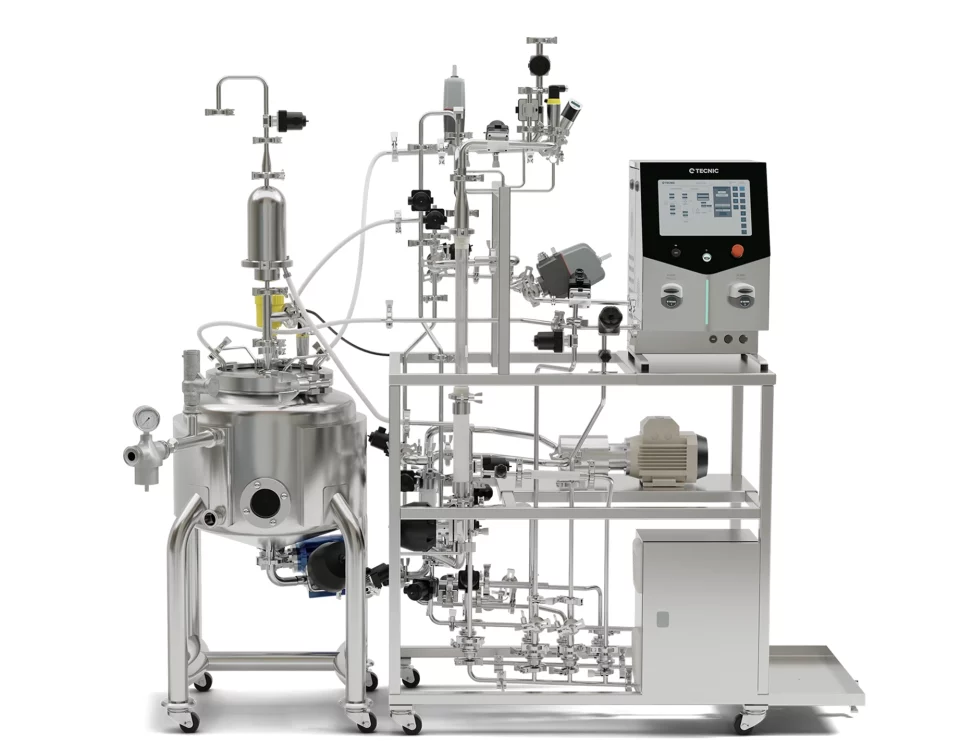
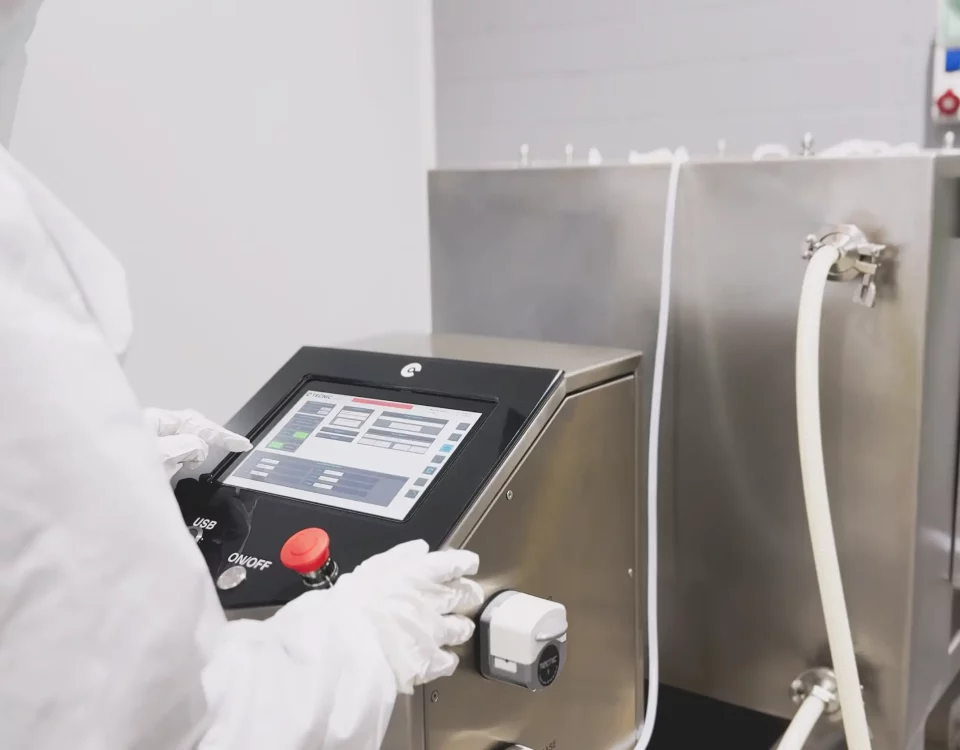
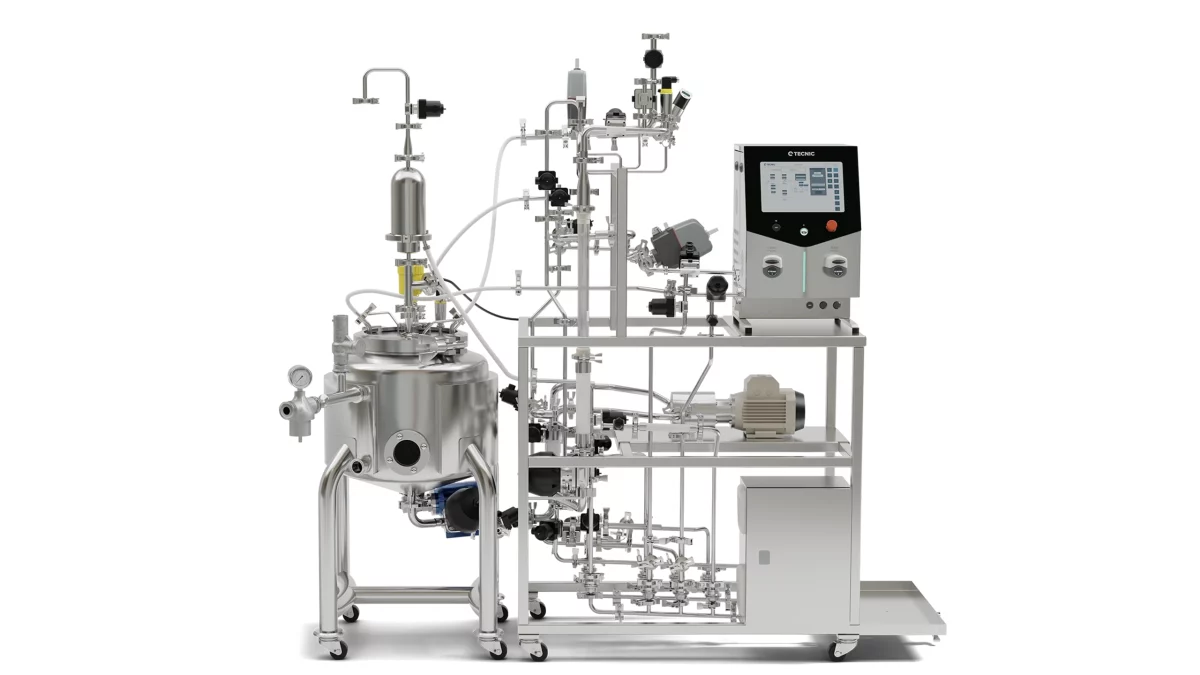
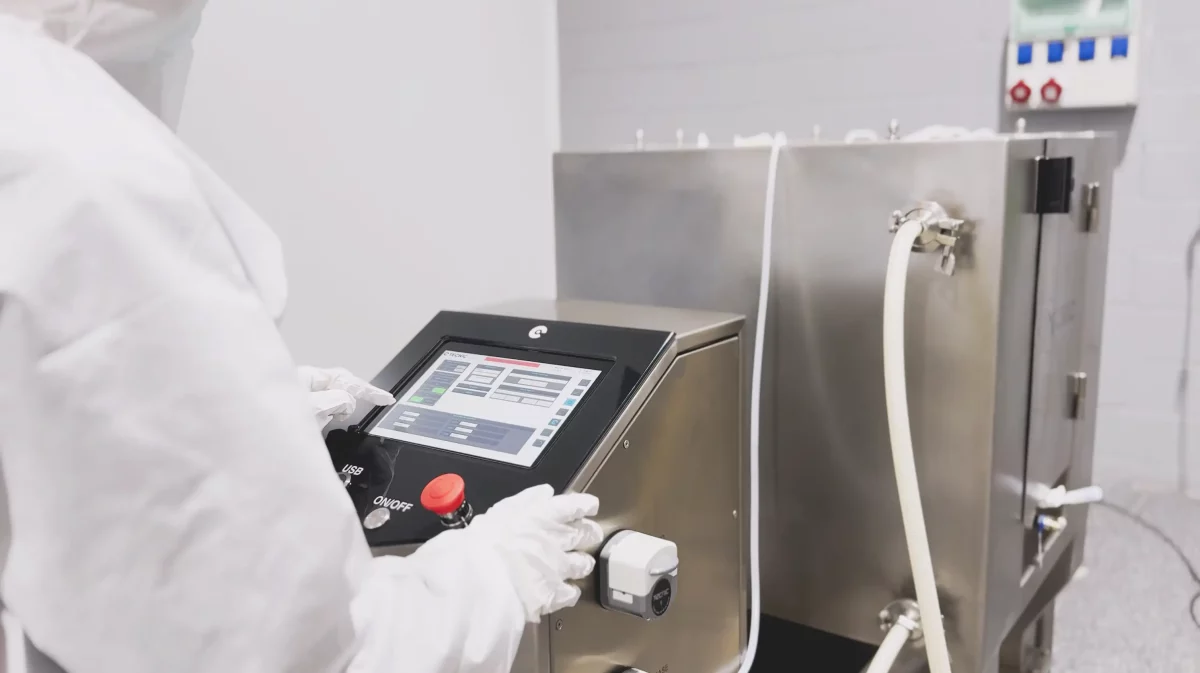
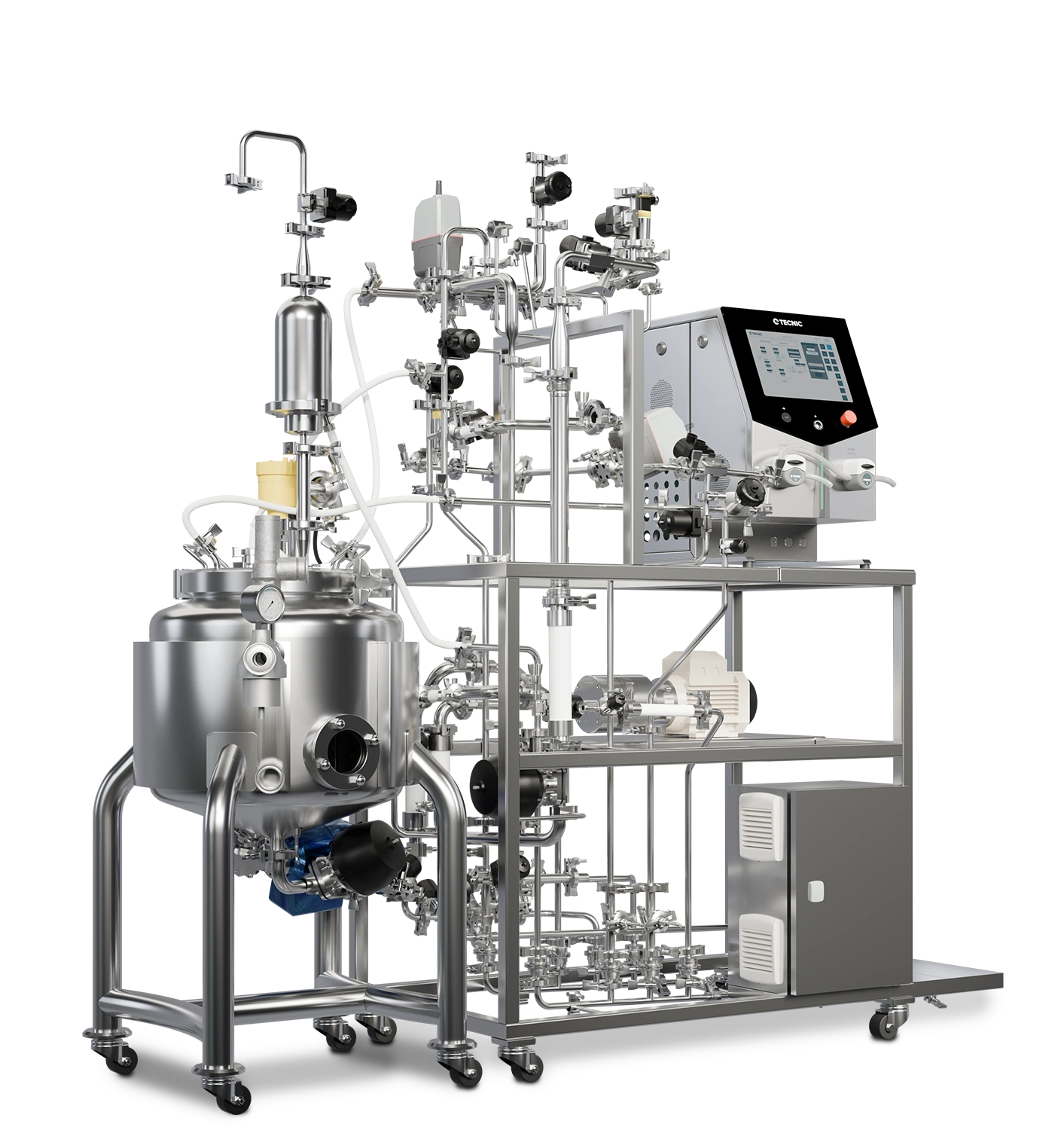
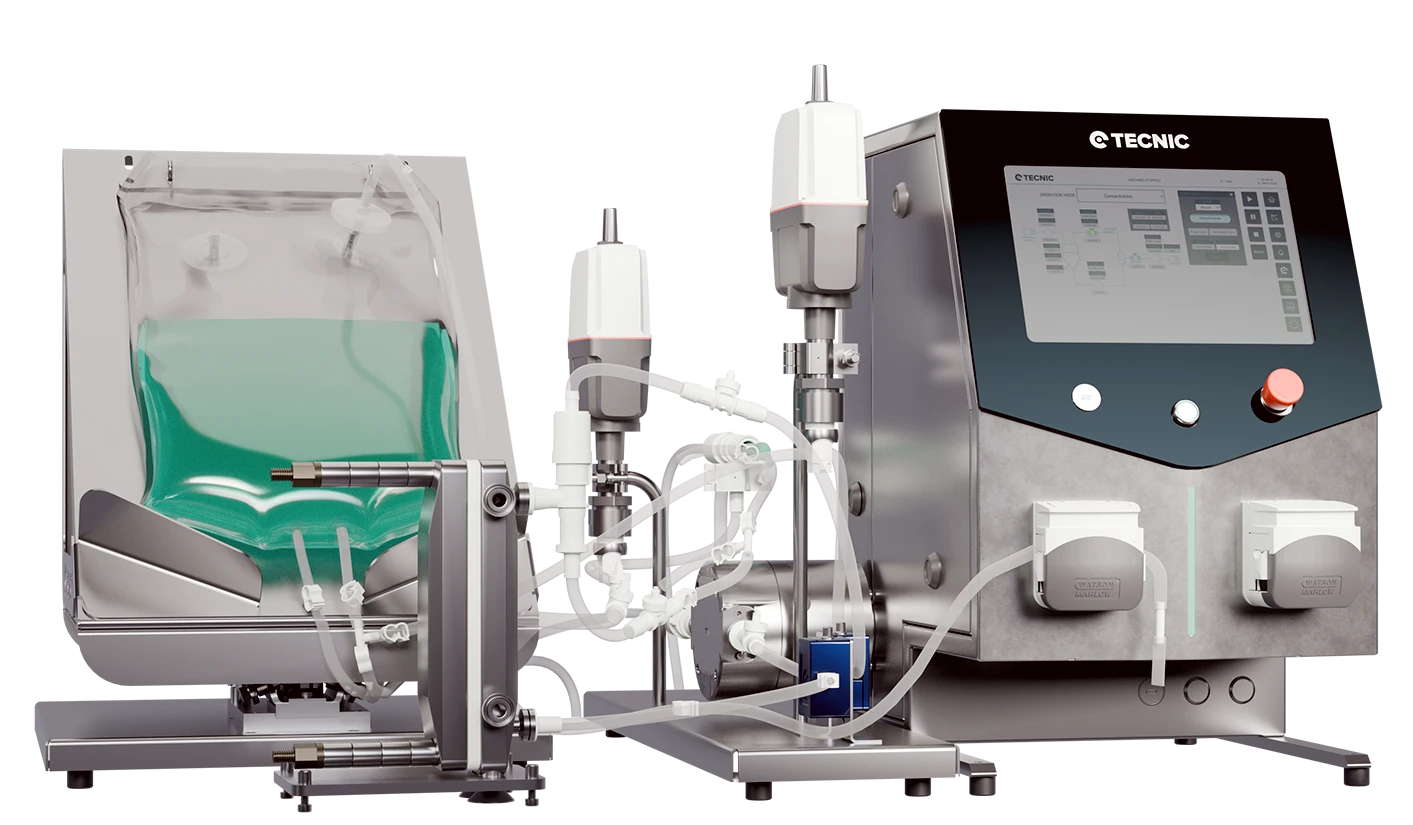
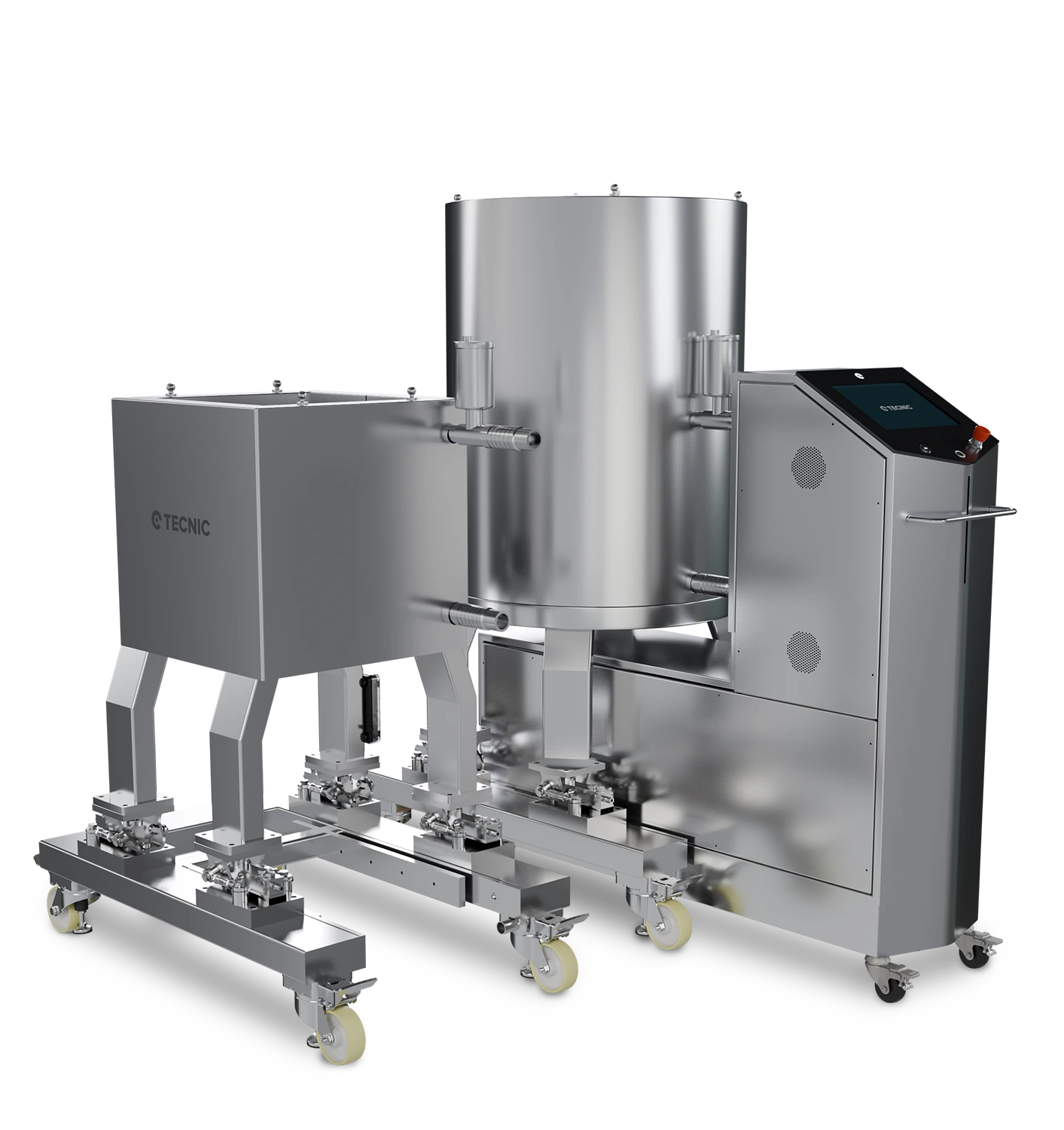
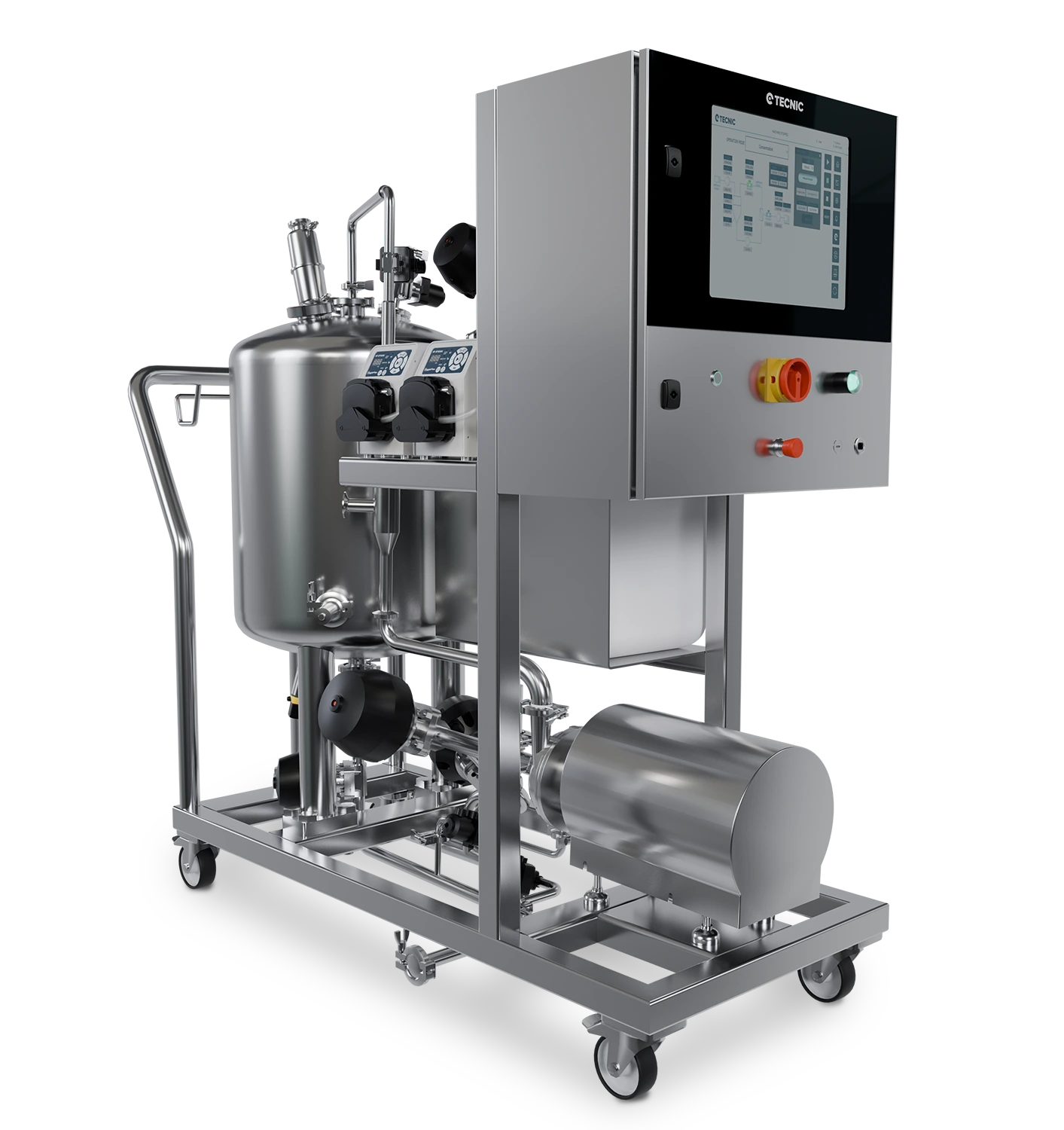
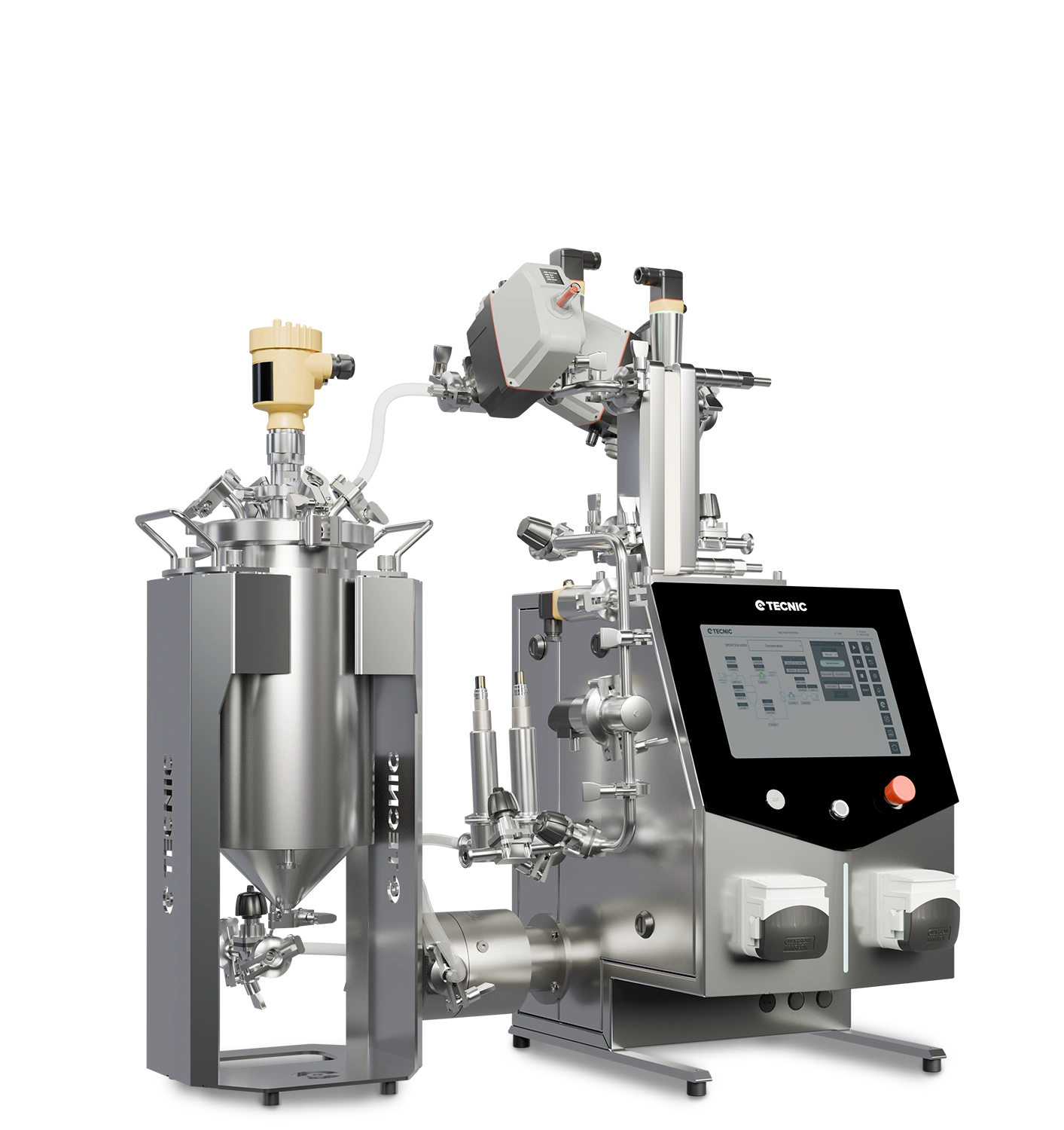
TECNIC presents eLAB TFF Single Use as a lab-scale way to intensify continuous culture by combining hollow fibre filtration, low cell stress recirculation and controlled media exchange in one modular workflow.
Why perfusion matters in process intensification
Perfusion matters because it changes the productivity logic of the culture. Instead of letting the system move toward nutrient depletion and waste accumulation in a more static way, the process keeps refreshing the environment while retaining the cells inside the bioreactor.
That allows higher cell concentrations and, in the right process context, better product yields. It also makes perfusion highly relevant for teams that want to intensify upstream work without waiting until later stages to start learning how the process behaves.
Intensification is not only about running harder. It is about keeping the culture productive for longer without losing control.
How the perfusion setup works
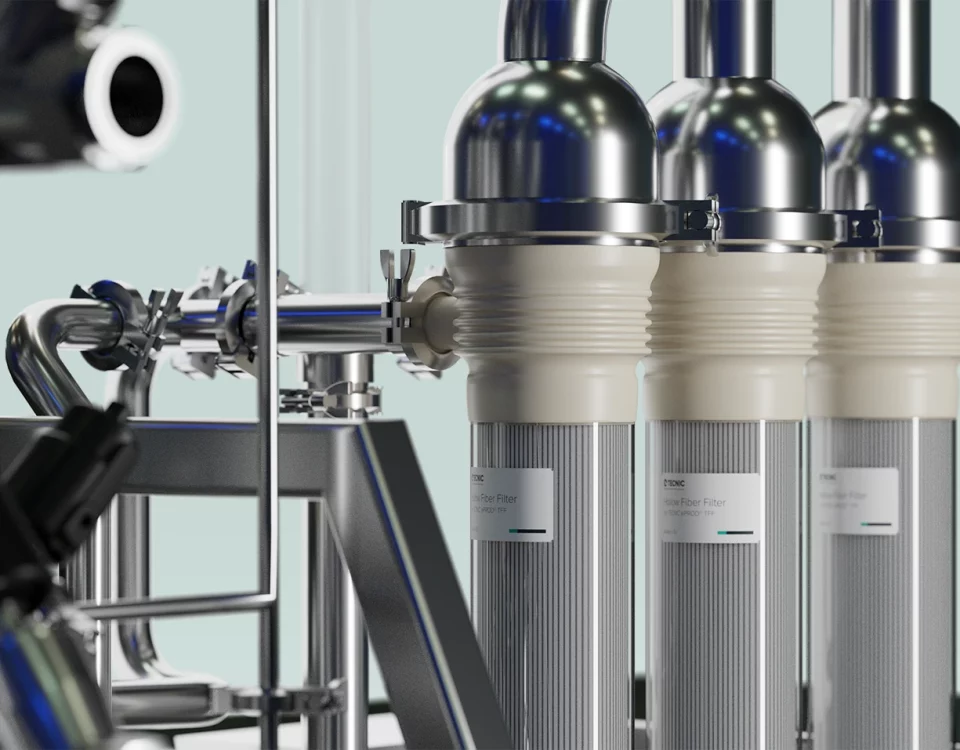
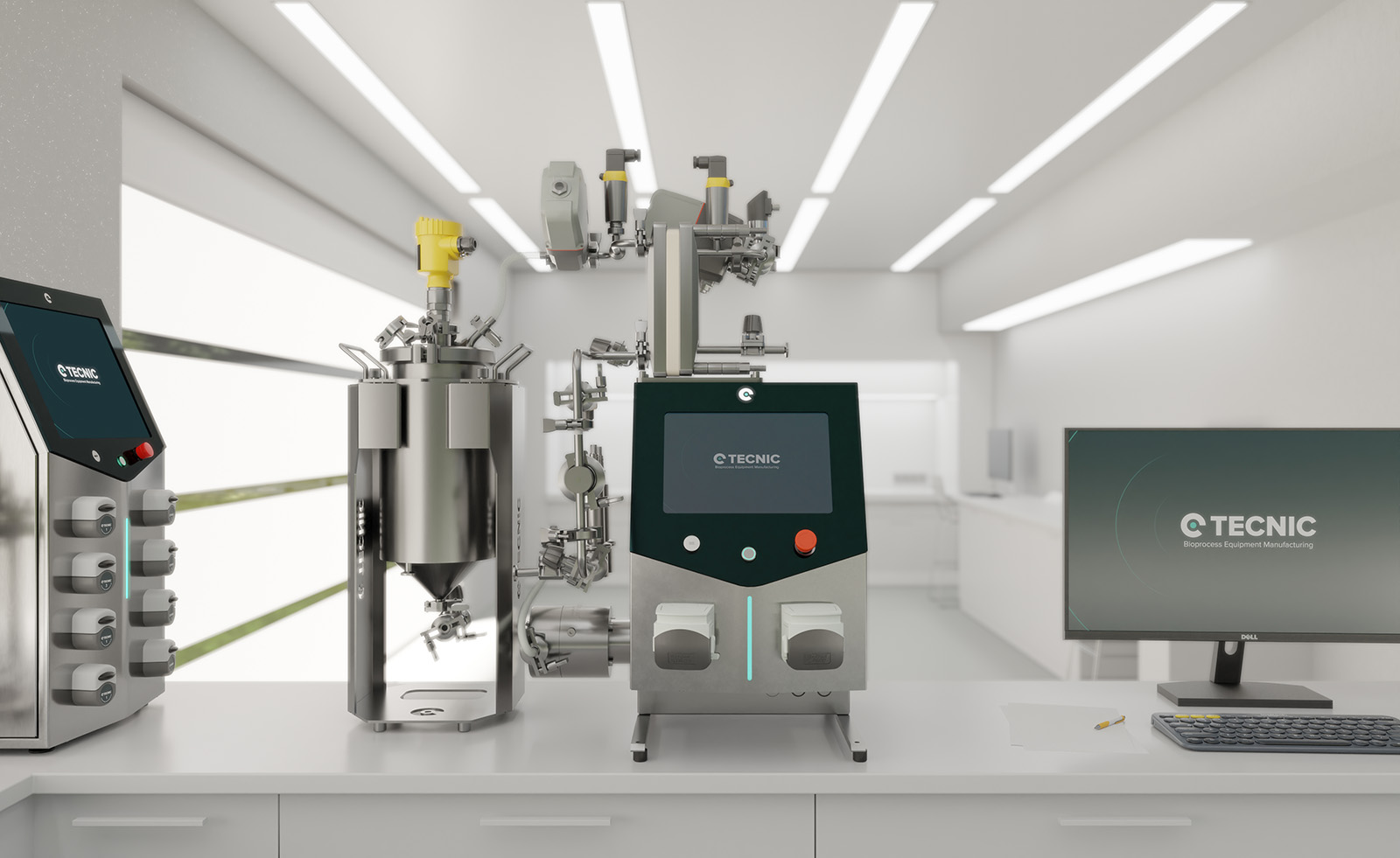
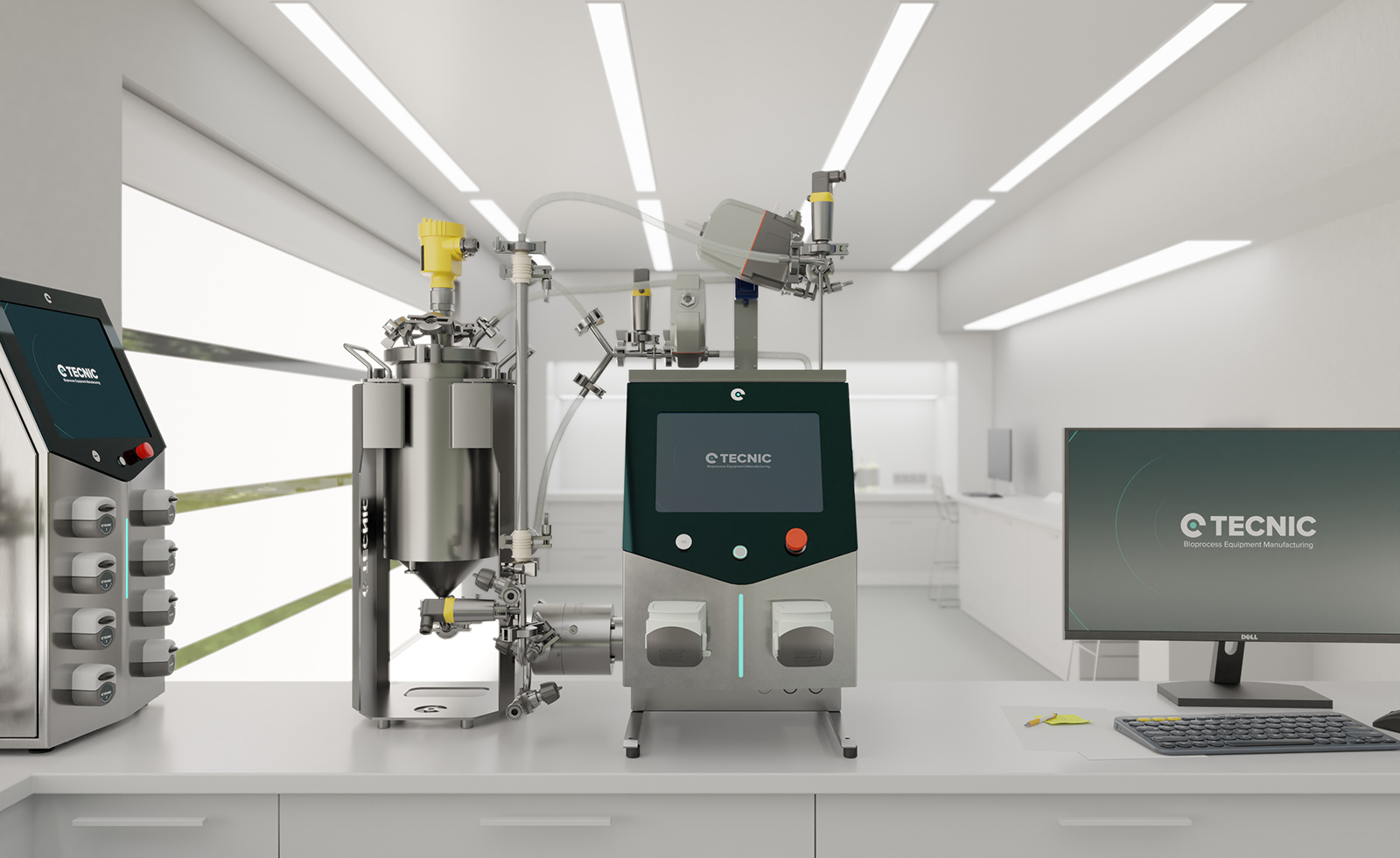
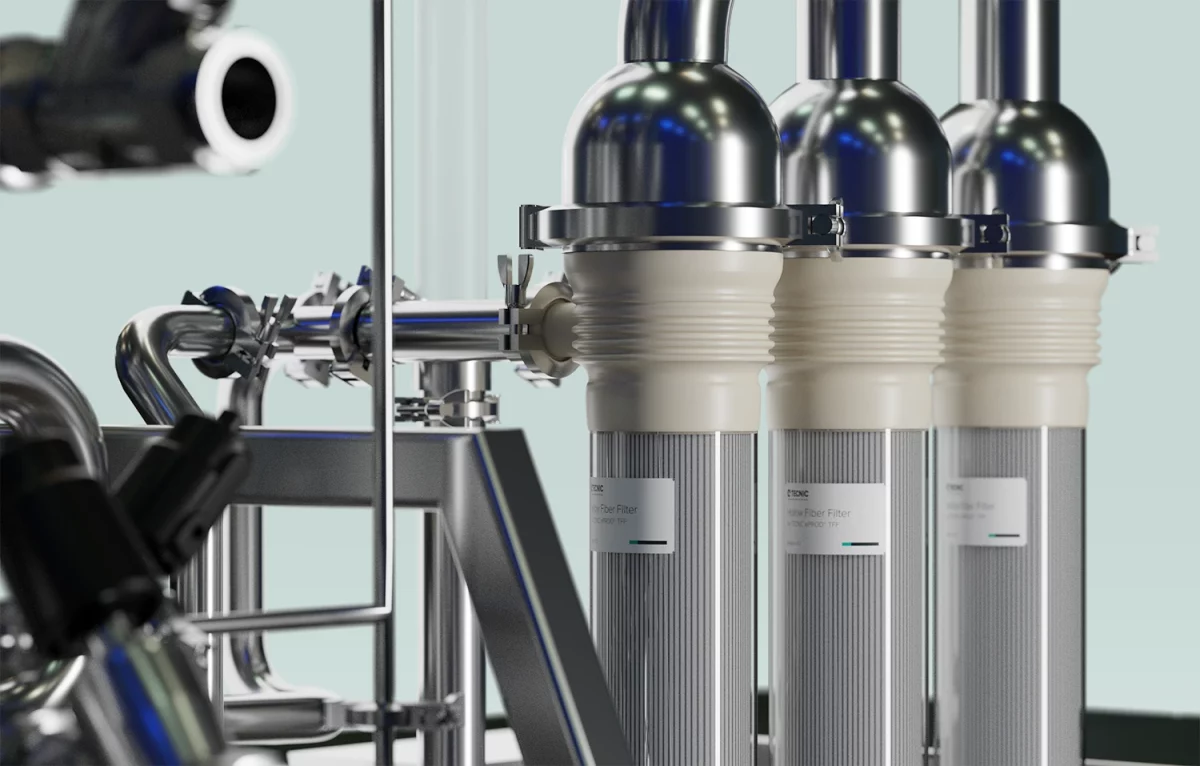
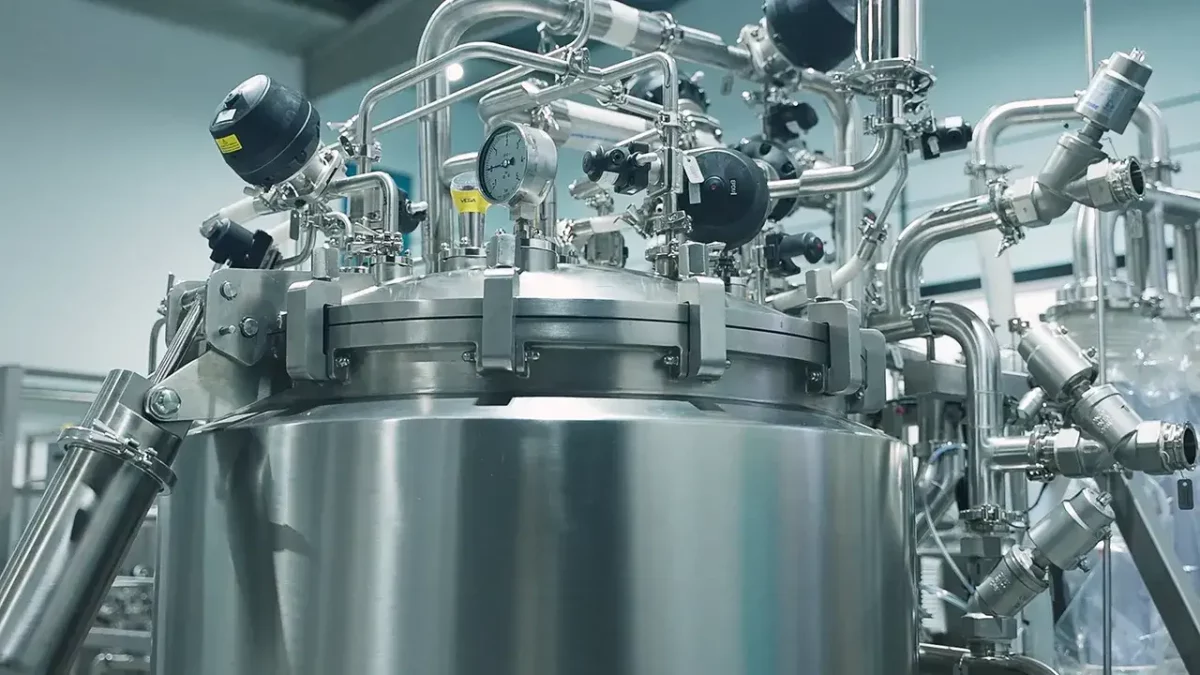
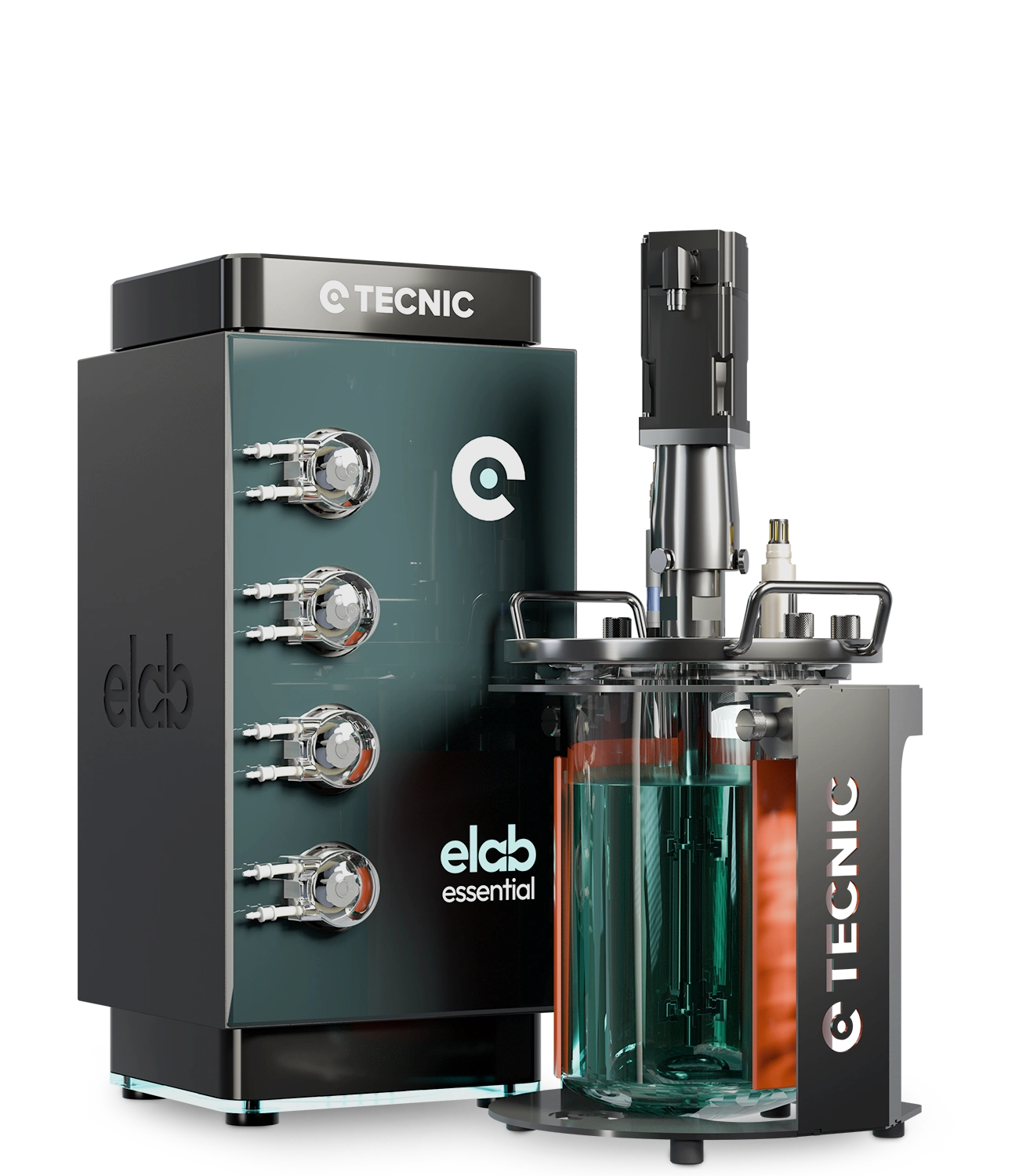
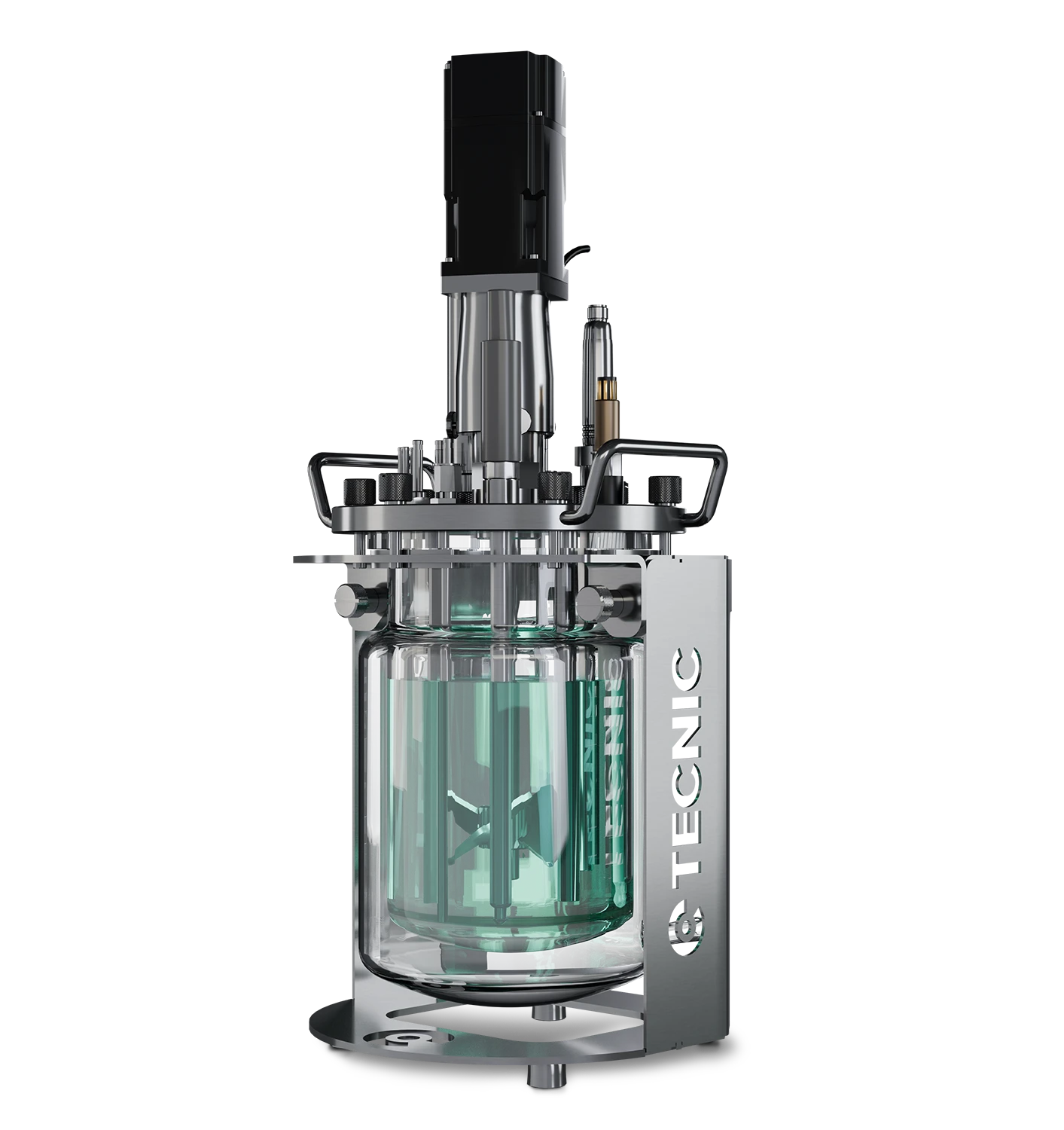
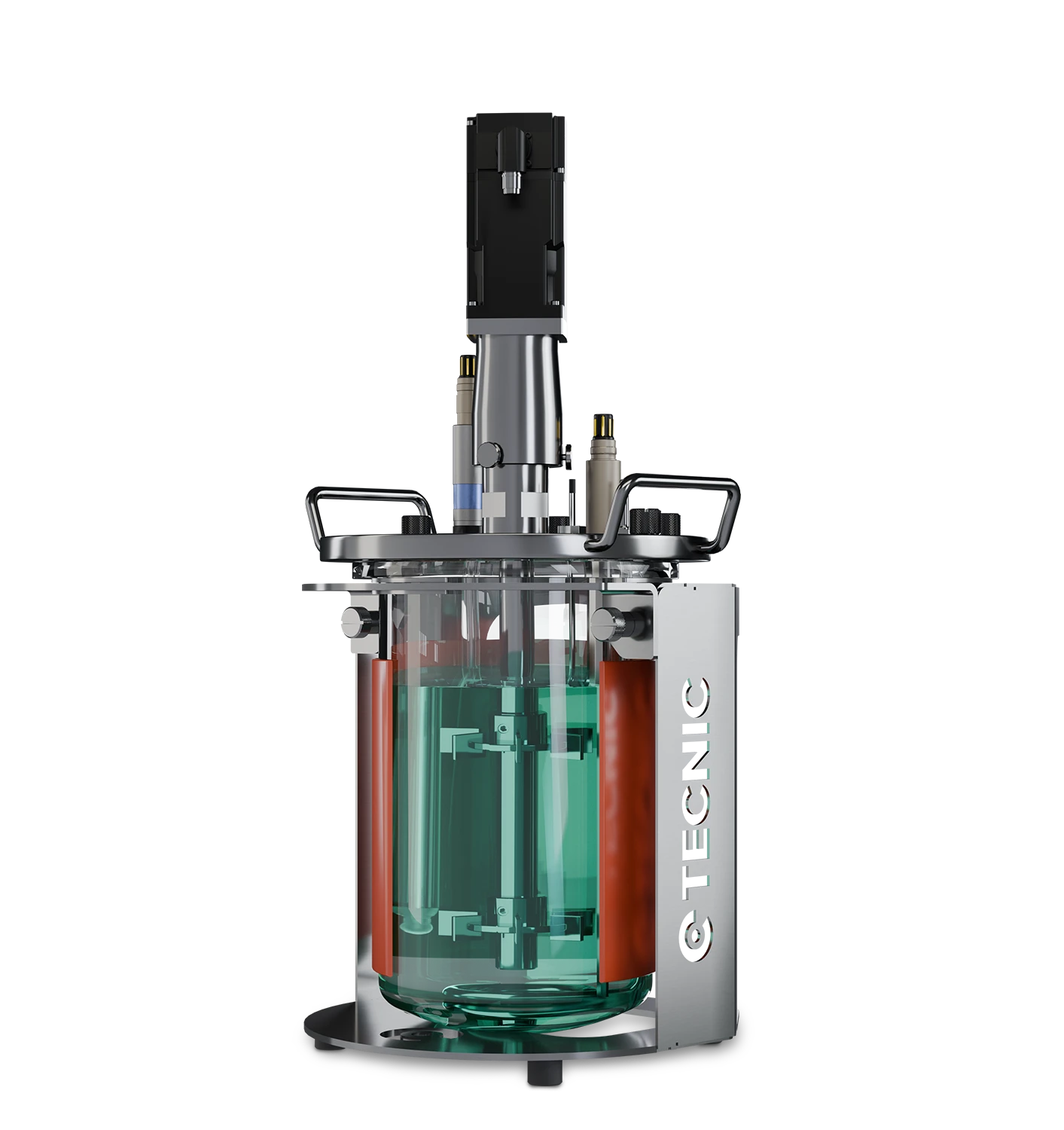
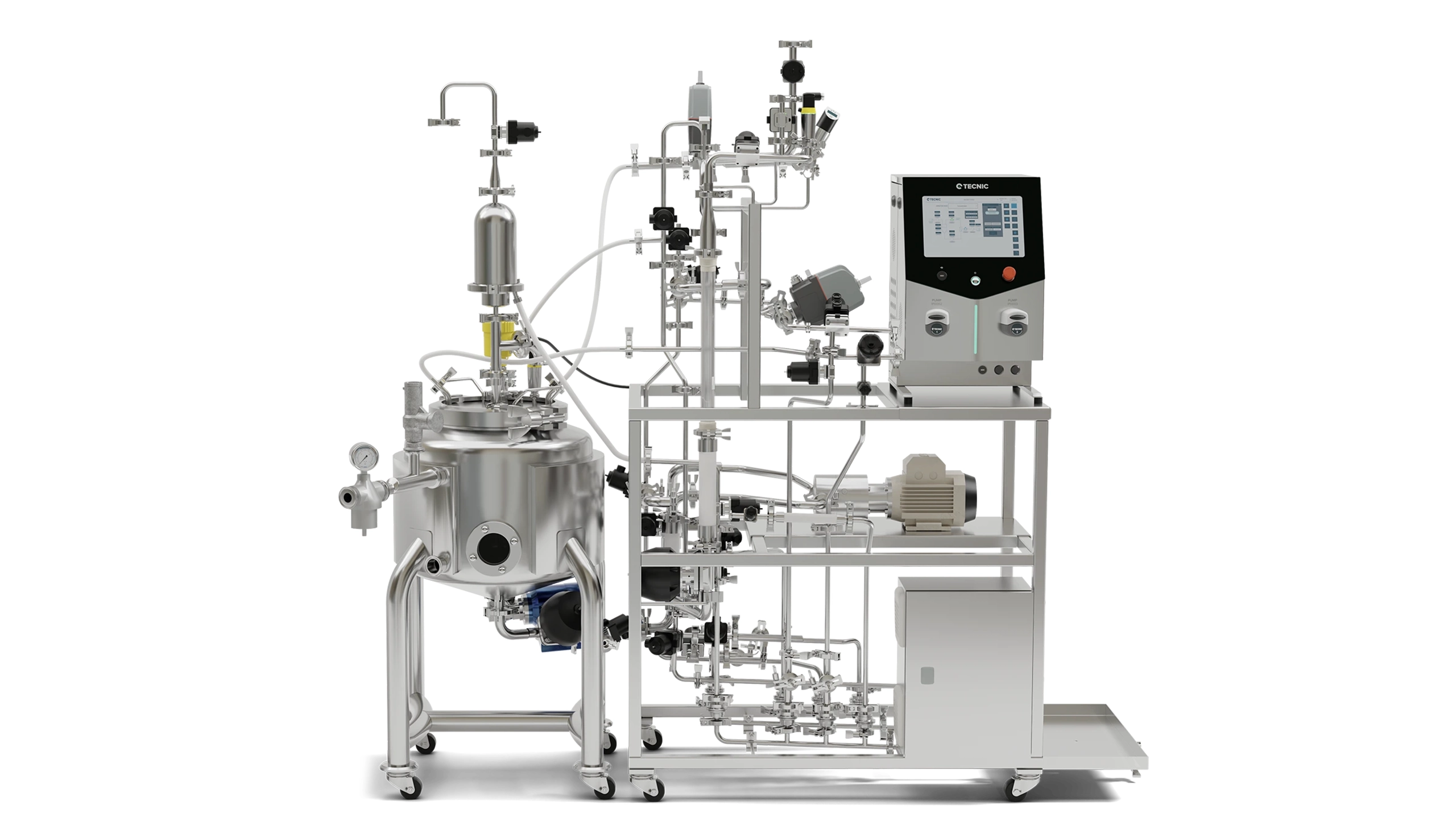
In the configuration described by TECNIC, one of the eLAB Bioreactor ports is dedicated to perfusion. From there, a low cell stress pump recirculates the product toward a hollow fibre filter. Cells retained by the filter are returned to the bioreactor, while the permeate is directed toward a storage vessel.
Fresh medium is then added through the overflow pump of the eLAB TFF unit, with control based on the weight of the bioreactor. As permeate leaves the system, the fresh medium replaces it to maintain a constant working weight.
The culture leaves the bioreactor through the dedicated perfusion route using a low cell stress pump.
The hollow fibre filter keeps the cells in the loop and returns them to the bioreactor.
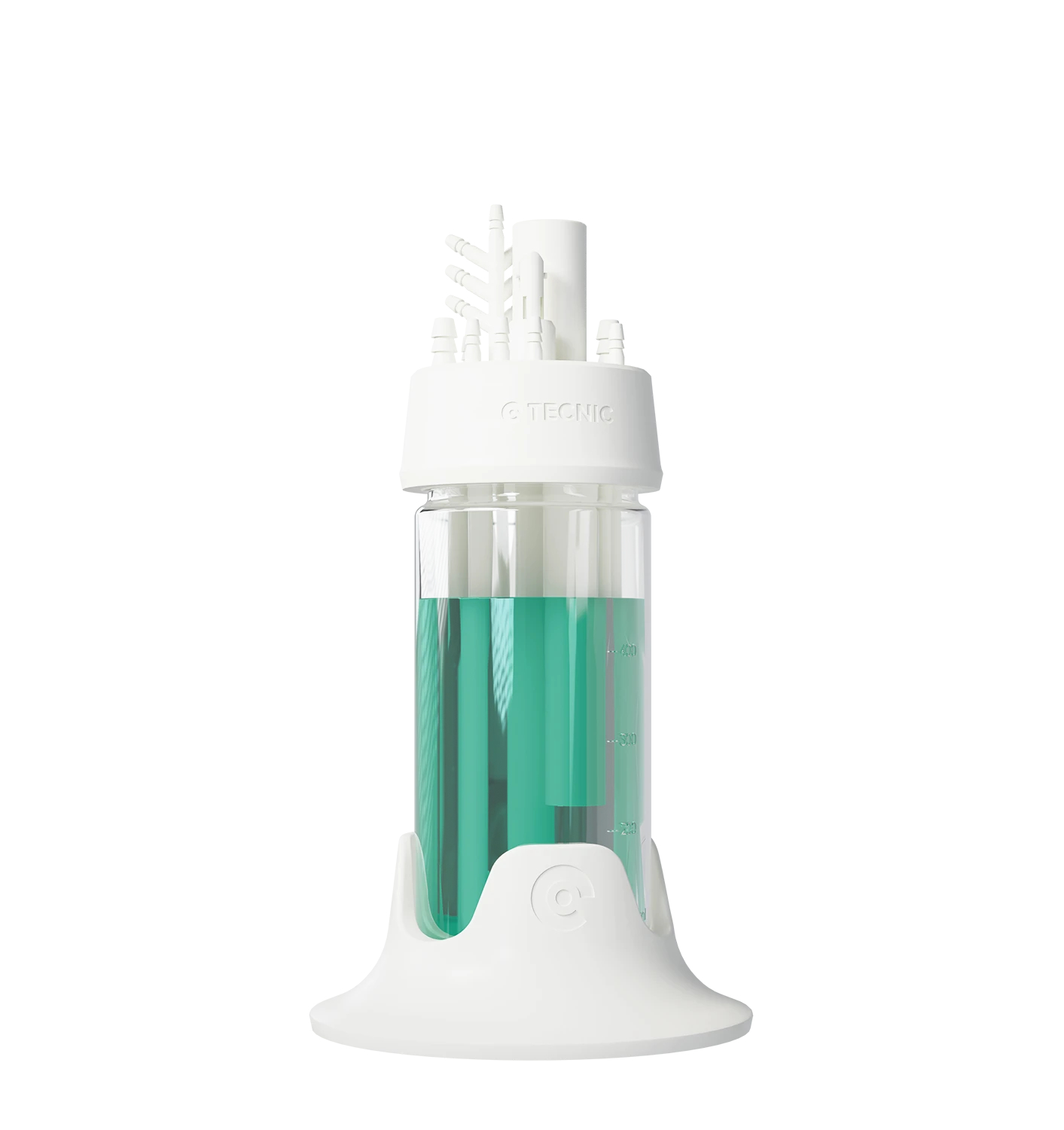
The filtered product stream is controlled and routed toward a storage vessel.
The system adds medium based on weight control to keep the culture volume stable.
Why this matters in the lab
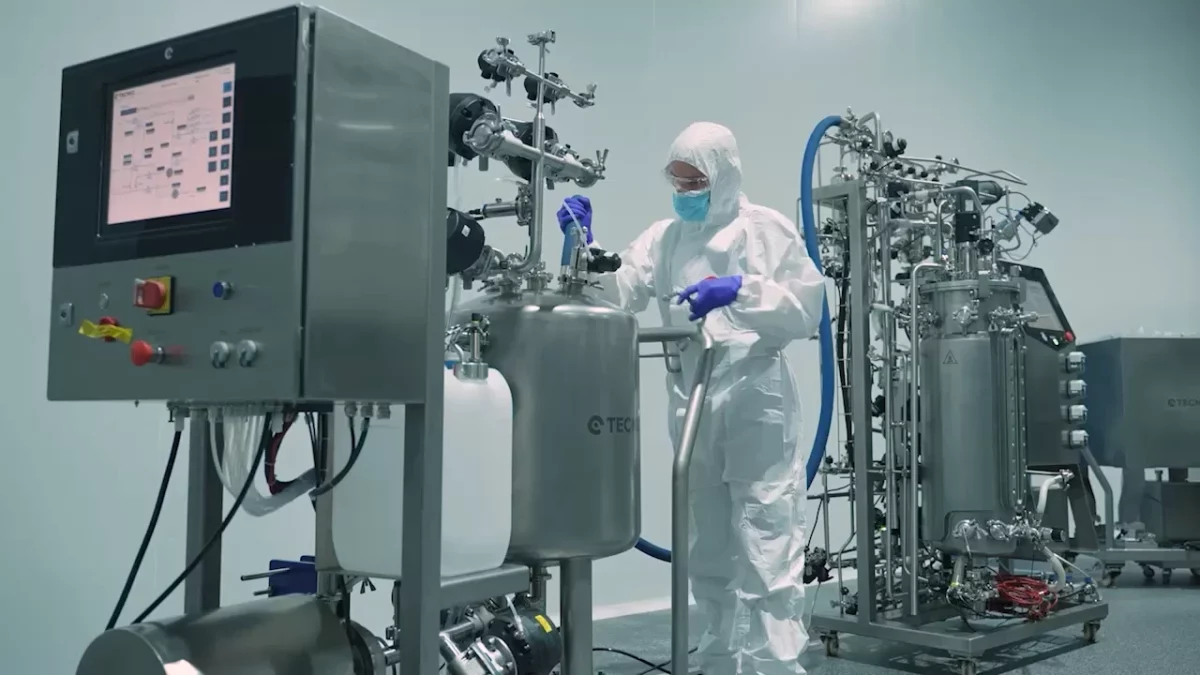
In a lab environment, perfusion can easily become too complex if the retention, pump control and media replacement logic are spread across too many disconnected elements. The value of a modular setup is that it makes the intensification strategy more workable in daily operation.
Where the lab benefits most
- Testing higher-density cultures without jumping too early into a large-scale setup.
- Reducing cell stress through gentler recirculation logic.
- Keeping the process easier to monitor and explain during development.
- Building a more credible scale-up path from research toward production.
A lab perfusion setup is most useful when it teaches the team something reproducible, not only when it looks technically advanced.
Perfusion vs standard operation
The contrast is useful because perfusion changes the process logic, not just one unit operation.
Standard batch or simpler operation
The culture environment evolves more passively over time, with fewer opportunities to refresh nutrients and remove unwanted compounds continuously.
Perfusion and intensification
The process keeps renewing the medium while retaining the cells, which supports higher densities and a more sustained productive environment.
What teams should check before implementing a lab perfusion workflow
A lab setup should be reviewed as a full process route, not as a list of isolated components.
How TECNIC fits this workflow
TECNIC positions eLAB TFF Single Use as a practical laboratory tool for perfusion and process intensification, not only as a filtration device. The current article makes that clear by describing the integration between the eLAB Bioreactor, hollow fibre filtration, low cell stress recirculation and controlled media addition.
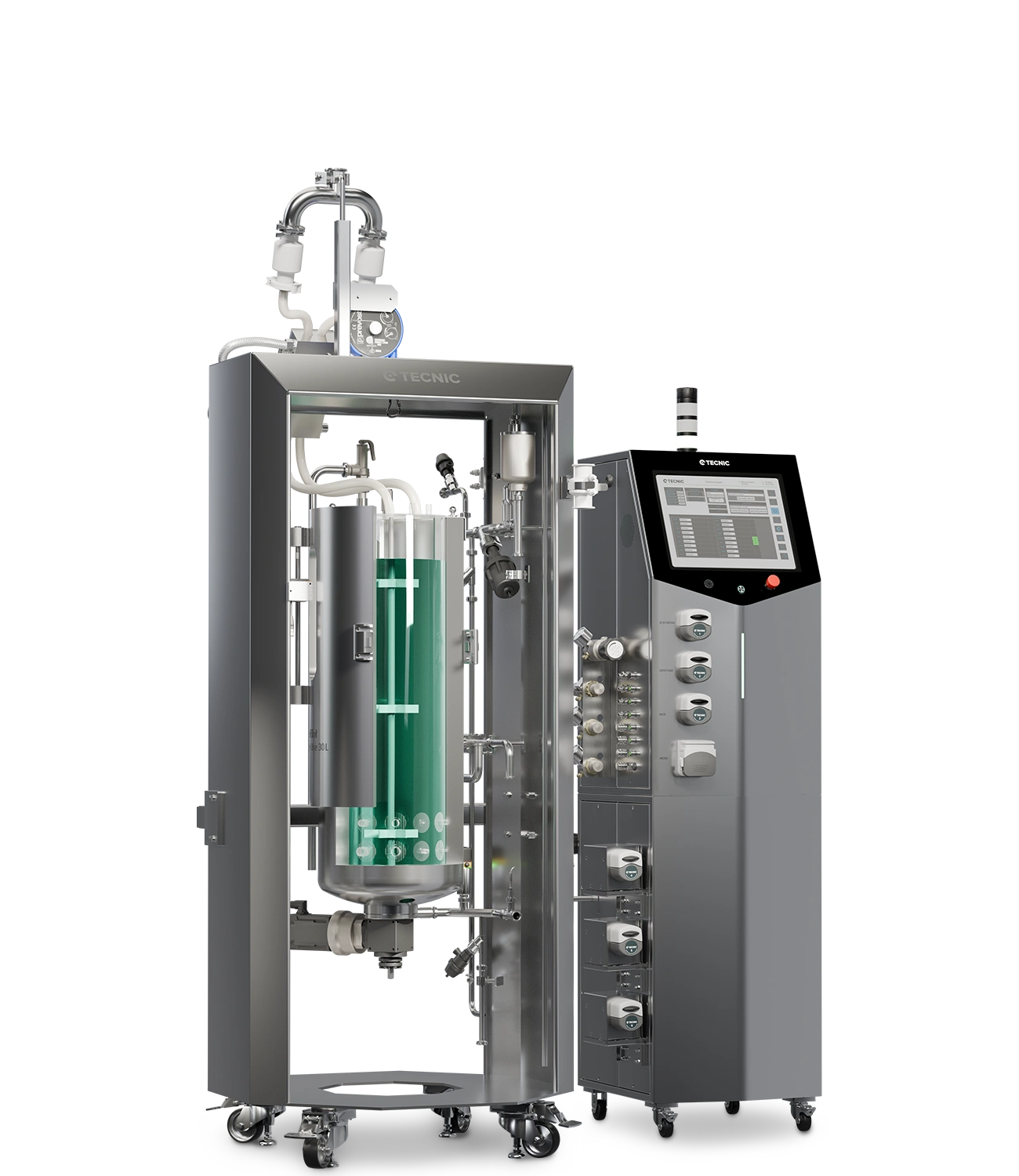
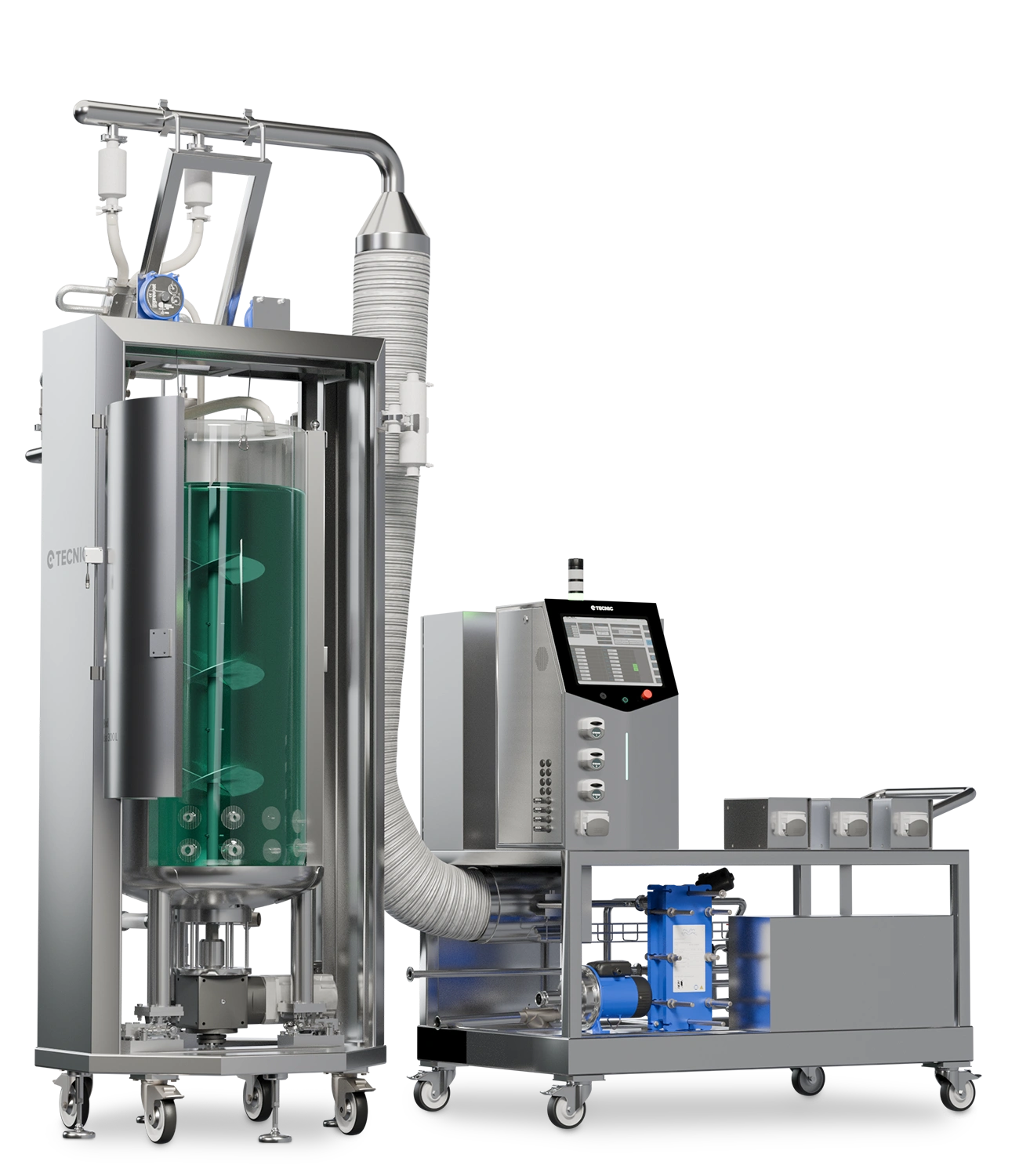
eLAB TFF Single Use
The clearest product bridge in this article, positioned as the lab-scale TFF solution used to support perfusion and intensification workflows.
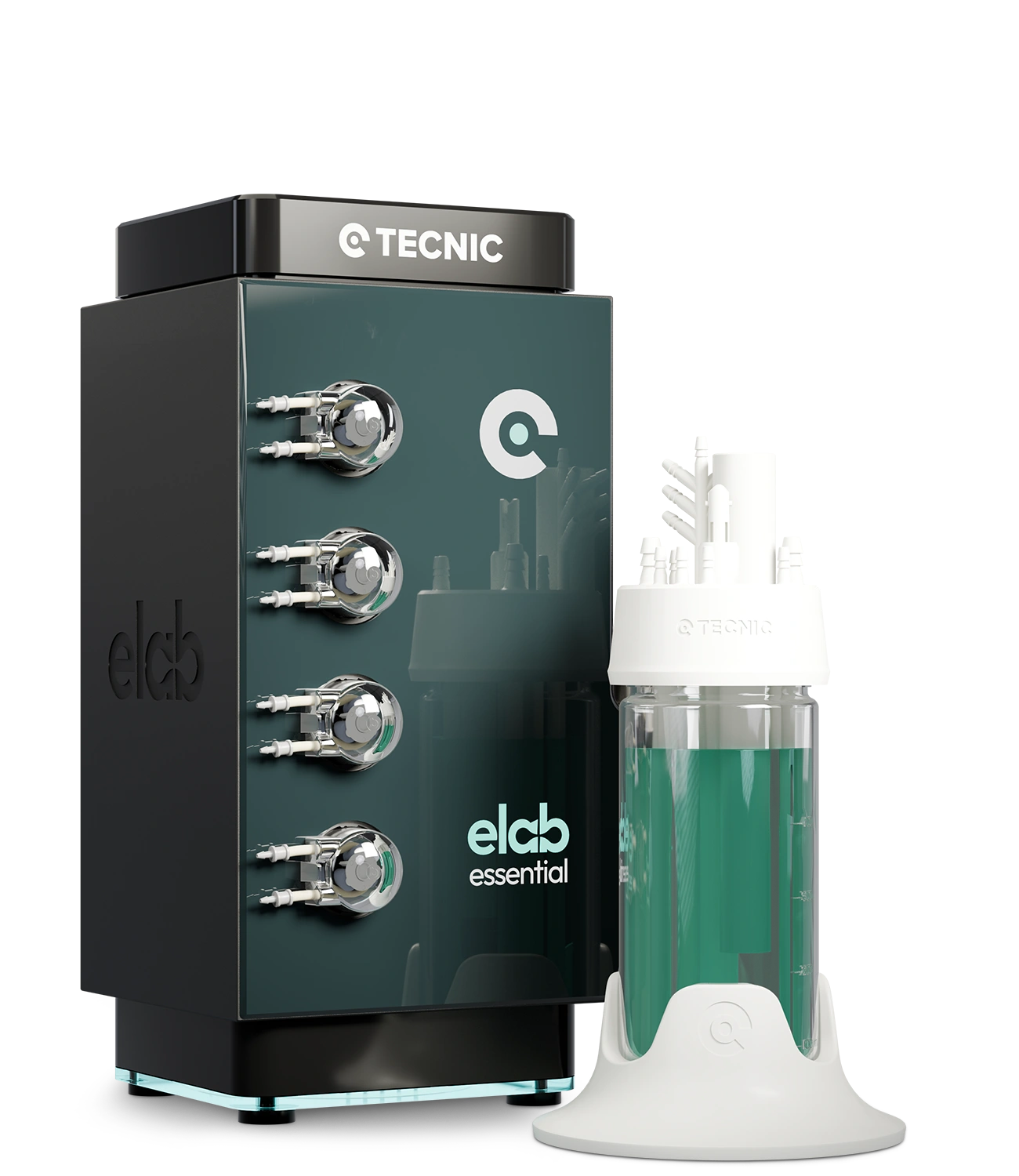
eLAB Bioreactor
Since the perfusion route is described from the bioreactor port outward, the bioreactor itself is part of the process logic and not just the upstream starting point.
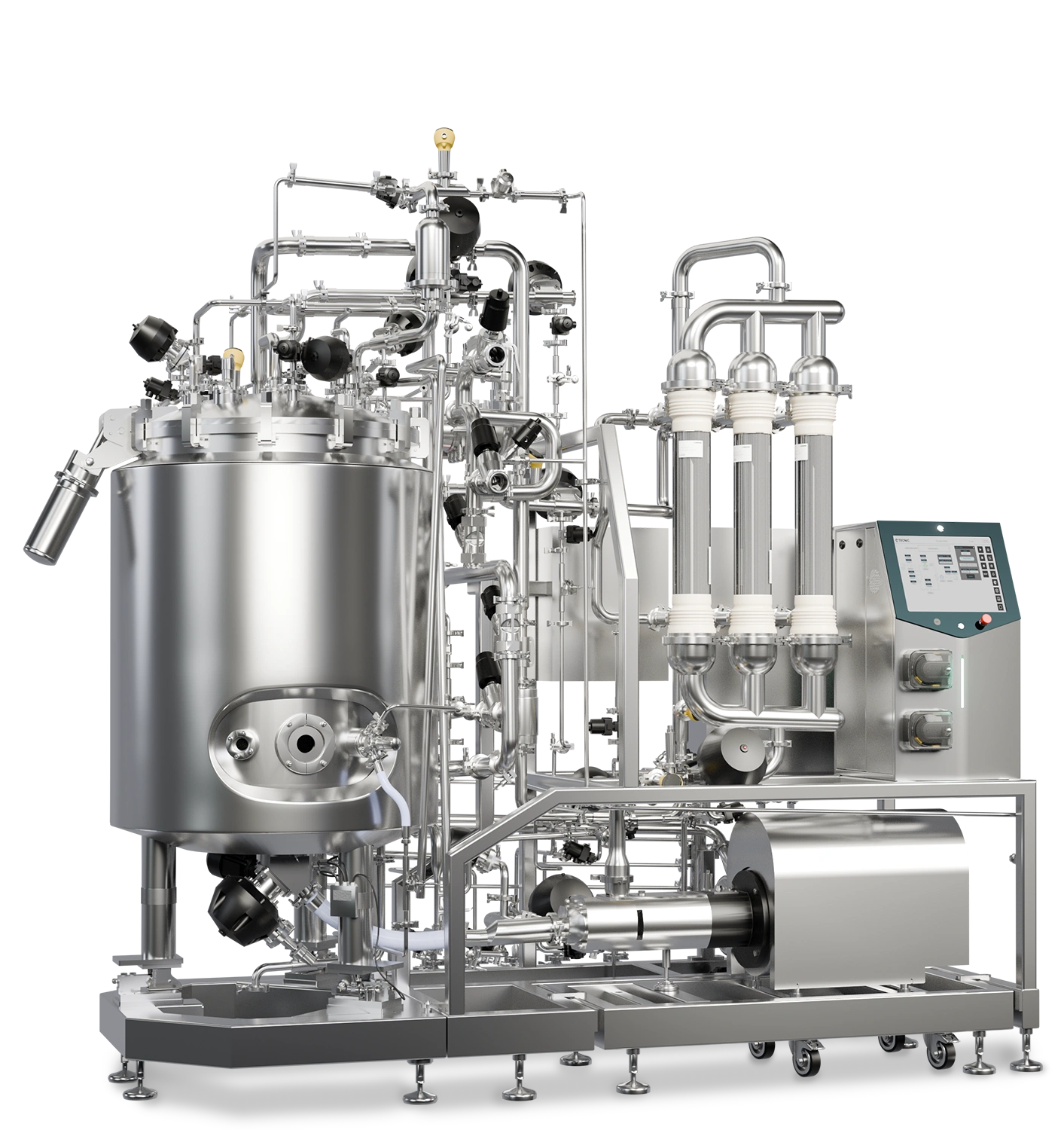
TFF systems range
For readers using the article as an entry point into tangential filtration, the wider TFF range is the natural next step.
Contact TECNIC
Since perfusion is a process decision as much as an equipment decision, direct discussion is a logical next move for teams evaluating fit.
This section stays process-oriented on purpose. It helps the article remain useful as an application piece while still guiding the reader toward real TECNIC solutions.
Frequently asked questions
What is perfusion in bioprocessing?
Perfusion is a continuous culture approach where cells are retained in or returned to the bioreactor while fresh medium is added and permeate is removed.
Why is perfusion considered a form of intensification?
Because it helps support higher cell densities and more productive culture conditions without simply running a standard batch process harder.
Why is hollow fibre filtration used in this setup?
It supports cell retention while allowing the filtered stream to be removed in a controlled way, which is useful in perfusion workflows.
Why does low cell stress recirculation matter?
Because a perfusion loop only works well if the cells remain viable while the culture is continuously recirculated through the retention route.
What makes a lab perfusion setup credible?
A credible setup is one that combines workable integration, gentle cell handling, stable control and a clear path toward larger-scale process understanding.
Exploring perfusion and intensification in your lab?
Explore the TECNIC TFF range or speak with our team to review the right setup for cell retention, media exchange and process intensification.